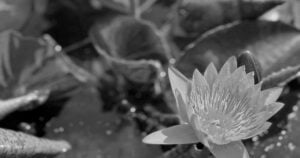
Cultivating the Awareness That Meets Life

Why do we practice?
Perhaps we first come to yoga because of the body. We want to become more flexible, ease discomfort, build strength, or simply feel better.
All good reasons to begin.
And for some of us, those reasons remain. There is nothing lesser about a practice that helps us inhabit our bodies more comfortably.
But sometimes, something else begins to happen along the way.
We notice how quickly we become frustrated. How often we compare ourselves to others. How difficult it can be to rest without feeling that we should be doing something.
We begin to recognize patterns that extend far beyond the mat.
And perhaps the question changes.
Not simply, What am I doing when I practice?
But What am I cultivating through practice?
What Cannot Be Seen
Much of what matters in yoga cannot be seen.
We can observe the depth of a stretch, the steadiness of a balance, or the shape of a posture. We can measure strength and flexibility.
But how do we measure patience?
How do we measure the moment someone recognizes an old reaction and chooses not to follow it?
Or the quiet compassion that arises when we stop treating ourselves as something that needs fixing?
These things are less visible, but they may be among the most meaningful expressions of practice.
Our culture places considerable value on what can be demonstrated. Progress is often something we can point to, measure, or compare.
Yoga offers another possibility.
We might become more interested in the quality of our attention than in the appearance of our postures.
We might begin to notice not only what the body is doing, but how we are relating to what the body is experiencing.
And somewhere in that noticing, another kind of practice begins.
An invisible one.
The Body as a Mirror
Consider a simple posture.
You settle into a shape and begin to feel sensation. Perhaps there is stretching through the hips, a gentle pull along the spine, or the weight of the body meeting the floor.
Then the mind begins its commentary.
I should be able to go deeper.
How much longer?
Everyone else seems comfortable.
I’m not very good at this.
Nothing unusual has happened. The mind is doing what minds do.
But something interesting becomes possible when we notice.
The posture may reveal impatience, comparison, resistance, or the desire to control an experience.
Not because these qualities are necessarily created by the posture, but because stillness can make them easier to recognize.
The body becomes a mirror.
And what we discover isn’t always comfortable.
We may notice how quickly we judge ourselves. How easily discomfort becomes a problem to solve. How often we believe that something needs to change before we can be at ease.
The invitation isn’t to criticize what we find.
It’s to become familiar with it.
There is an important distinction here. Listening to the body doesn’t mean enduring every sensation or remaining in a posture when something feels wrong. Sometimes awareness leads us to stay and explore. Sometimes it leads us to soften, find support, or come out.
The choice itself can become an expression of practice.
We are learning to recognize our experience without automatically overriding it.
And that relationship may begin to follow us into everyday life.
The Space Between Experience and Reaction
Patañjali’s Yoga Sūtras offer a description of yoga that has been interpreted and explored for centuries:
Yogaś citta-vṛtti-nirodhaḥ.
Often translated as the stilling of the fluctuations of the mind.
In Patañjali’s philosophical framework, this teaching belongs to a much larger understanding of consciousness and liberation. In contemporary practice, we often approach one aspect of it through the experience of observing the mind.
Thoughts arise. Emotions move. Sensations change.
And sometimes, rather than becoming immediately caught in what arises, we recognize that we are aware of it.
A thought can be noticed without being believed.
An emotion can be felt without determining our next action.
An uncomfortable experience can be acknowledged without becoming the whole story.
This doesn’t mean we stop having reactions.
We are human. We become impatient. We worry. We feel hurt, frightened, disappointed, and overwhelmed.
Practice doesn’t exempt us from any of that.
But awareness may offer a little room around our habitual responses.
A moment in which we recognize what is happening before deciding what to do next.
That moment may be brief.
Sometimes it is no more than a breath.
But a breath can be enough to interrupt a familiar pattern.
Not every time. Not perfectly.
And perhaps perfection was never the point.
Walking the Same Street
In her poem Autobiography in Five Short Chapters, Portia Nelson describes walking down the same street and repeatedly falling into a hole.
Most of us know what it feels like to repeat something we thought we had already learned.
We return to the same argument.
We believe the same painful story about ourselves.
We respond to uncertainty with the same attempt to control everything around us.
Sometimes we recognize the pattern only afterward.
Sometimes we see it unfolding and still follow it.
And occasionally, something different happens.
We notice earlier.
There is a moment of recognition, and the familiar response no longer feels quite so inevitable.
We might choose to pause instead of speaking.
To listen instead of defending.
To acknowledge fear without allowing it to make every decision.
The circumstances may not have changed.
But our relationship to them has.
This is one way I understand the freedom that practice can cultivate.
Not freedom from difficulty.
Not freedom from being human.
But a growing capacity to meet familiar experiences without always repeating familiar responses.
We don’t suddenly become people who never fall into old habits.
We become people who may recognize the pattern sooner.
And when we don’t, we can begin again.
There is no final arrival required.
What Life Asks of Us
Of course, life offers experiences far more difficult than an uncomfortable posture or a moment of impatience.
There are losses we cannot prevent.
Relationships change. Bodies age. Plans unravel. People we love become ill. Sometimes life asks us to carry something we never would have chosen.
No amount of yoga can guarantee that these things won’t happen.
And I don’t believe practice should be presented as a way to rise above the ordinary vulnerability of being human.
We aren’t practicing to become untouchable.
We are practicing within lives that will inevitably touch us.
This is where I often find myself thinking about compost.
A compost pile receives what has reached the end of its usefulness. Fallen leaves, vegetable scraps, wilted flowers.
Given time and the right conditions, what was discarded becomes something that can nourish new growth.
I find something meaningful in that image.
Not because every painful experience contains a hidden gift. Some experiences are simply painful, and we don’t need to turn them into lessons.
But sometimes, with time, something changes in our relationship to what has happened.
Grief may deepen our tenderness toward others.
Disappointment may help us recognize what matters.
An experience we would never choose again may leave us with a clearer understanding of ourselves.
Not everything becomes wisdom.
And not everything needs to.
But perhaps practice helps us remain open to the possibility that our experiences can continue to unfold in meaning.
We don’t always know what something will become while we’re living through it.
Sometimes understanding arrives much later.
Sometimes it doesn’t arrive at all.
We can still meet ourselves with care.
Everything Has a Season
There is another aspect of practice that becomes increasingly meaningful to me: learning to live with change.
Nature offers reminders everywhere.
Leaves fall. Seasons turn. Light changes. What flourished for a time eventually gives way to something else.
We understand this easily when we look at the natural world.
And yet we often ask something different of our own lives.
We want certainty to remain.
We want the people we love to stay.
We want our bodies to continue doing what they have always done.
We want the moments that bring us happiness to last.
And when life changes, as it inevitably does, we may find ourselves struggling not only with what has happened but with our resistance to its happening.
The Bhagavad Gītā explores the relationship between wholehearted participation in life and attachment to outcomes.
It doesn’t ask us to withdraw from living.
It asks us to consider whether we can act with sincerity and care without insisting that everything unfold according to our expectations.
I find this especially relevant to the practice of yoga.
We can give ourselves fully to a posture without demanding a particular result.
We can make an effort without turning the outcome into a measure of our worth.
We can care deeply about something while recognizing that we cannot control every part of it.
And perhaps we can begin to bring that same understanding into our relationships, our work, and the changing circumstances of our lives.
Letting go isn’t always an act of release.
Sometimes it begins with recognizing how tightly we’re holding.
The Practice We Carry With Us
I sometimes think we misunderstand what it means for yoga to change us.
We may imagine transformation as something dramatic. A moment of clarity. A breakthrough. A new version of ourselves.
But much of what changes us happens quietly.
We notice that we are speaking to ourselves a little more kindly.
We recognize when we need rest.
We become less interested in proving something and more willing to understand it.
We begin to listen differently.
Not because we’ve mastered the practice, but because the practice has given us opportunities to pay attention.
And paying attention changes what becomes possible.
There may be days when none of this feels available.
We lose patience. We react before thinking. We forget everything we thought we understood.
That, too, is part of practice.
We can return.
Again and again.
Not to erase what happened, but to meet the next moment with whatever awareness is available.
Perhaps this is why I continue to find meaning in yoga after so many years.
The postures change. The body changes. What we need from practice changes.
But the invitation to pay attention remains.
And the more we practice, the more opportunities we may recognize to bring that attention into ordinary life.
Into a difficult conversation.
Into uncertainty.
Into the experience of loving someone.
Into the quiet moments when nothing in particular is happening.
The practice doesn’t end when we leave the mat.
In some ways, that is where we begin to discover what it has offered us.
We cannot always choose what life brings.
We cannot prevent every loss, quiet every fear, or arrange our lives so that nothing difficult happens.
But we can continue cultivating the awareness with which we meet what comes.
Not perfectly.
Not without forgetting.
And not because awareness makes us immune to pain.
But because sometimes it gives us enough space to recognize that another response is possible.
Perhaps the deepest practice is not becoming someone else.
Perhaps it is learning to meet the life we have, and ourselves within it, with a little more awareness, compassion, and care.
If you’d like to go deeper
Sri Swami Satchidananda, The Yoga Sūtras of Patañjali (Integral Yoga Publications, 1978)
Eknath Easwaran, The Bhagavad Gītā (Nilgiri Press, 2007)
Thich Nhat Hanh, No Mud, No Lotus (Parallax Press, 2014)
Pema Chödrön, When Things Fall Apart (Shambhala, 1997)
Portia Nelson, There’s a Hole in My Sidewalk: The Romance of Self-Discovery (Beyond Words, 1993)